


How Seated Exercise Jump Starts Recovery in Early-Stage Rehabilitation
Why Early-Stage Rehabilitation Requires a Different Approach
Following an injury or surgery, early-stage rehabilitation focuses on restoring functional movement while protecting healing tissues and rebuilding confidence. Patients at this stage often experience pain, swelling, restricted mobility, fear of re-injury, and reduced endurance, all of which can make traditional exercise inadvisable or unsafe. The primary goals of early rehab are to reintroduce movement and begin rebuilding strength without placing unnecessary stress on the body.
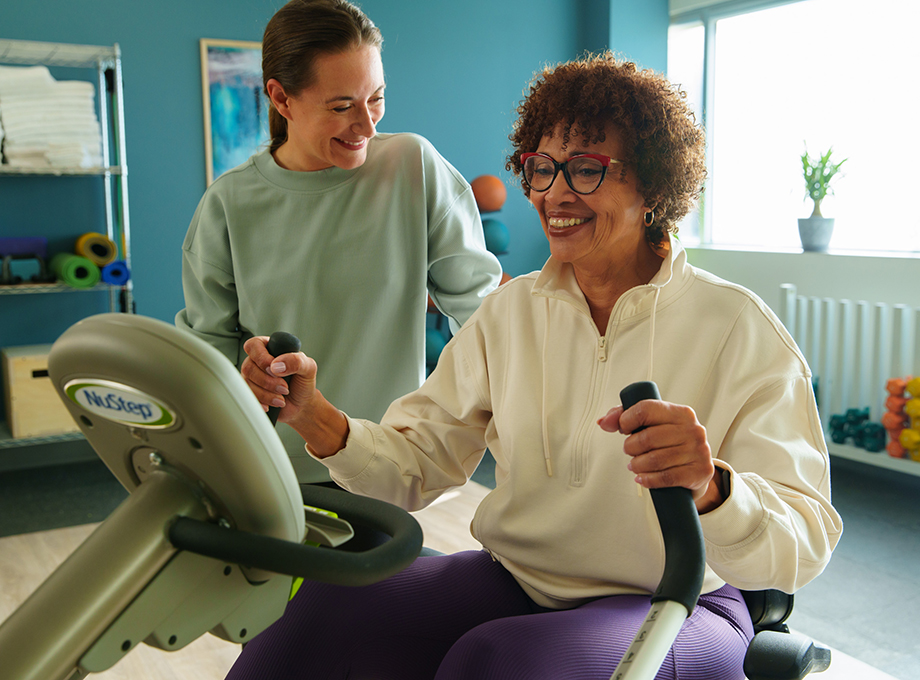
Seated exercise offers a safe, practical way to begin this process. By reducing balance demands and impact, it allows patients to move earlier and more comfortably. In clinical settings, recumbent cross training, with cross trainers like the NuStep, is often used as a bridge between rest and more advanced therapeutic exercise, helping patients transition back to functional movement at an appropriate pace.
What Is Seated Exercise and Why It Matters
Unlike standing or weight-bearing activities, seated exercise on a NuStep keeps patients in a secure, stable position that reduces joint loading. This makes it particularly valuable in the earliest phases of recovery where the goal is to regain range of motion. Seated exercise can also:
- Support proper body alignment and promote steady, controlled motion.
- Help patients feel secure and supported throughout exercise.
- Encourage compliance and set the stage for the next phase of rehab.
Physiological Benefits of Seated, Low Impact Movement
Even gentle, low impact movement provides important physiological benefits in early rehabilitation. Seated exercise on NuStep machines promotes circulation and improves oxygen delivery to muscles and tissues, supporting healing and reducing stiffness.
It also works on joint mobility and muscle activation without putting excessive load on vulnerable structures. Patients can engage major muscle groups and work on range of motion while avoiding the stress associated with standing or high-impact activity.
How NuStep Recumbent Cross Trainers Support Early-Stage Rehab
NuStep’s focus on innovations in accessibility ensures its equipment can accommodate users of virtually all fitness levels and functional abilities. NuStep recumbent cross trainers support early-stage rehabilitation by providing:
- Contralateral motion that engages both upper and lower extremities.
- Adjustable resistance and user-controlled pace for individualized progression.
- Smooth, low impact movement appropriate for healing tissues.
- Accessibility for patients with mobility or balance limitations.
This combination makes NuStep recumbent cross trainers effective and versatile tools for early-stage rehabilitation.
Clinical Applications and Use Cases
Therapists can integrate NuStep seated exercise into phased rehabilitation programs in several practical ways. It can:
- Perform as a warm-up function to increase circulation and prepare joints for therapy.
- Serve as a conditioning tool when standing exercise is not appropriate.
- Support recovery-focused movement on lower-intensity therapy days.
Transitioning Patients Toward More Advanced Movement
Seated exercise is not an endpoint. It prepares patients for standing and weight-bearing therapy by building strength, coordination, and cardiovascular tolerance in a controlled environment.
Progression strategies may include increasing session duration, gradually adding resistance, or introducing more complex coordination patterns, all of which can be done on the NuStep. Over time, these changes help patients regain confidence and achieve physical readiness for the next phase of recovery. Seated training should always be positioned as a step toward restoring functional movement and independence, not a limitation.
Conclusion
Seated exercise, like that you can get on a NuStep, plays an important role in early-stage rehabilitation. The low-impact, total-body workout helps activate muscles and restore functional movement, getting patients on the path towards recovery sooner.
Interested how seated exercise can help your patients? Reach out to the NuStep team today to get started!
